 support@selfdefenceusa.com
 +1 (602) 874-0409

WHAT A GUN IS
A primer for our politically charged time: What guns are, how they work, and how to use them safely.
Guns are a part of American life, and have been since the very beginning, from the matchlock muskets arming the earliest colonies to the Colt revolvers and Winchester rifles of the Old West to the Glock handgun of today. But as guns have become less frequent, gun literacy has declined. We shoot more. We know less. This becomes clear amidst our current politically charged debate about guns and how to counter gun violence.
So, in Popular Mechanics fashion, let’s talk about the gun as a tool. I’ve built several of my own rifles, enjoy shooting and tinkering with other types of firearms, and have handled almost every major gun type built in the last 500 years. Here’s what you need to know about how guns work, what the various kinds are, and how to understand the jargon around firearms.
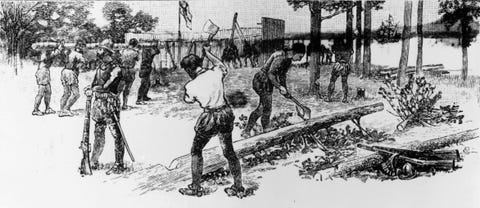
A colonist stands guard with matchlock while others built a fort at Jamestown, Virginia, 1607.GETTY IMAGES
How Guns Work
The U.S. Bureau of Alcohol, Tobacco, Firearms and Explosives defines a firearm as, “Any weapon (including a starter gun) which will or is designed to or may readily be converted to expel a projectile by the action of an explosive.” In other words: If you have a tube and a projectile, and the projectile is designed to fly out of the tube as the result of an explosion, you have a firearm. This is a broad definition that covers everything from potato guns to fully automatic machine guns, but it gets at the basic idea of what a gun is.
MORE FROM POPULAR MECHANICS
Easy 3M Tape DispenserPlay Video
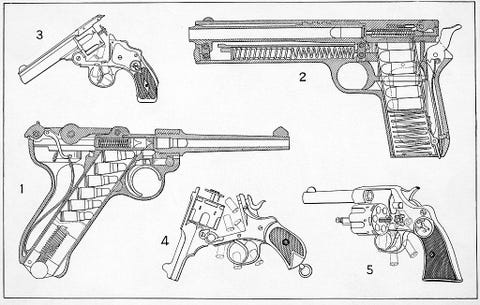
In the most basic sense, guns work like this: A bullet is loaded into the rear of the barrel, which is a tube connected to the firing pin. What happens mechanically when you pull the trigger is that the firing pin is released. It flies forward, striking a tiny explosive charge located in the base of the bullet. That explosion ignites the gunpowder, which is tucked inside the shell casing surrounding the bullet. The pressure change forces the bullet out of the casing and down the barrel toward the target.ADVERTISEMENT – CONTINUE READING BELOW
GETTY IMAGES
Admittedly, the rapid evolution of guns makes it hard to look at them and see their basic components—a trigger, firing pin, and tubes. Today’s firearms have magazines capable of holding up to 30 or more bullets, or more than one barrel, or can fire more than one bullet per pull of the trigger. Some guns have lights, lasers, rifle scopes, bipods, and other accessories to identify a target or aid in marksmanship. Many guns are very simple, but some guns are very complicated.
GETTY IMAGES
Calibers & Bullet Types
You’ll hear “caliber” tossed around in any discussion of guns, on the news or otherwise. The term is merely a way to identify the type of cartridge that the weapons fires.
Bullet calibers are identified two ways: by fractions of an inch or in millimeters. The .45 ACP round used in many handguns is 0.45 inches in diameter—just under half an inch wide. The .22 round, .38 Special, and .500 Action Express rounds are all named for their sizes as a fraction of an inch. The 5.56-millimeter round used in an AR-15 (also expressed, in inches, as .223) is 5.56 millimeters in diameter.
The nine-millimeter round is nine millimeters in diameter. And so on.
That said, a bullet’s diameter does not mean it will fit in every gun of that size, and there are many sub-varieties of ammunition. A .357 Magnum revolver bullet will not fit in a Glock pistol chambered in .357 SIG. The .22 Short round is primarily meant for pistols, while the .22 Long round is meant for rifles. This is starting to sound complicated, but what you really need to know is that, generally, a single gun can only shoot a single kind of bullet.
ADVERTISEMENT – CONTINUE READING BELOW
Different types of bullet calibers are meant to accomplish different tasks, and there are literally hundreds of bullet calibers. Some are for smaller shooters more sensitive to recoil, others are for long range shooting, while still others are for close range self defense. For example, a .22 Long round is meant for small game hunting and light target practice. A .223 round, just a tiny bit wider in diameter than .22 Long has a longer range, travels at a higher velocity, and is much more lethal because of the shape of the bullet and the use of more gunpowder.
WHAT A GUN IS
Bullets also have different shapes or other features to take on different tasks. Hollow point bullets have a cavity in the nose of the bullet that allows the lead to spread outward on impact, morphing the aerodynamic bullet into a deadly, high velocity metallic flower, creating gaping wounds. Tracer bullets are designed to allow the shooter to see where his or her bullets are striking at night, and armor-piercing bullets can penetrate body armor and light steel armor. Both are generally restricted to military use. “Snake rounds”, pistol rounds that fire a spread of small metal pellets are useful for killing—you guessed it—dangerous snakes at a distance.
Types of Guns
There are many kinds of guns in circulation today, but they can be divided into two categories: long guns, including rifles and shotguns, and handguns, including revolvers and pistols. As a general rule, long guns fire large-caliber rounds from long barrels and are meant to be fired from the shoulder. Handguns are smaller-caliber weapons with shorter barrels, and are meant to be fired using one or both hands.
Let’s talk about some of the most common gun types:
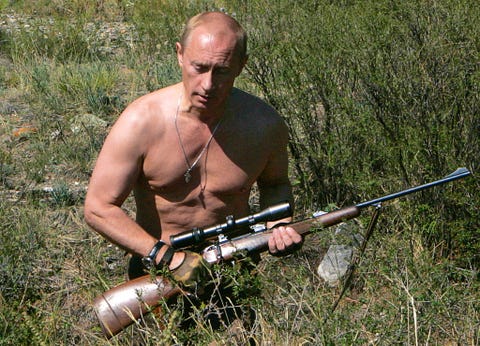
Hunter with bolt-action rifle.DMITRY ASTAKHOVGETTY IMAGES
Because of their manual nature, bolt action guns are accurate but slow to fire. Bolt action rifles hold between four and ten bullets in an internal or detachable magazine. Examples of a bolt action rifle include the Remington 700 and Howa 1500.ADVERTISEMENT – CONTINUE READING BELOW
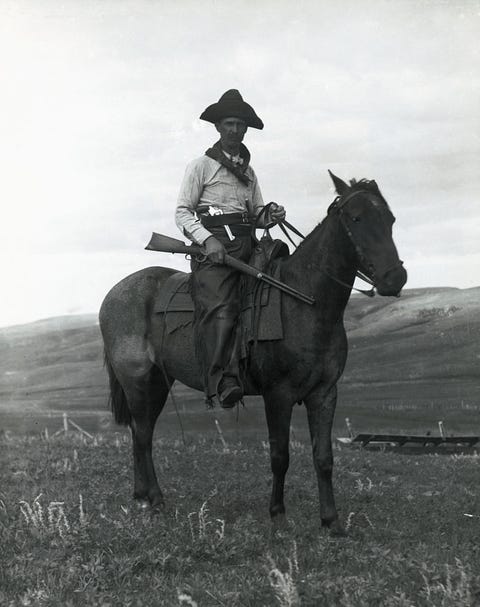
Cowboy on horseback with lever-action rifle, circa 1900.GETTY IMAGES
Lever action rifles: These rifles date back to the 19th century and are often seen in Western films. A pull of a lever attached to the rifle loads a fresh bullet, the user pulls the trigger, and another pull of the lever ejects the empty cartridge and loads a fresh one. The position of the lever makes it much faster to fire than a bolt action rifle. Modern examples include the Winchester 94 and Marlin 336.
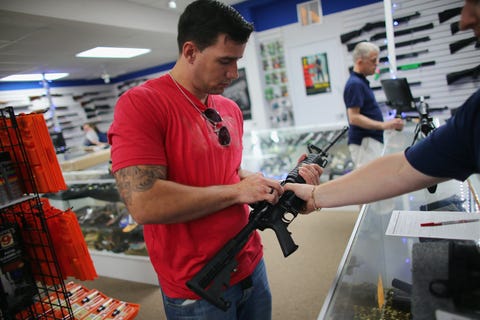
AR-15 rifle.JOE RAEDLEGETTY IMAGESADVERTISEMENT – CONTINUE READING BELOW
Semi-automatic rifles: These weapons can vary greatly, but the common feature is that every pull of the trigger releases one bullet and loading a new round is automatic. These guns are sometimes called “automatic” weapons, but in this case that term refers to the loading, not the firing.
Many semi-automatic rifles have external magazines holding five to thirty rounds, which can be changed quickly to reload the weapon. Examples of semi-automatics include the AR-15 and Browning BAR rifles. (Notice the difference in appearance of both.)
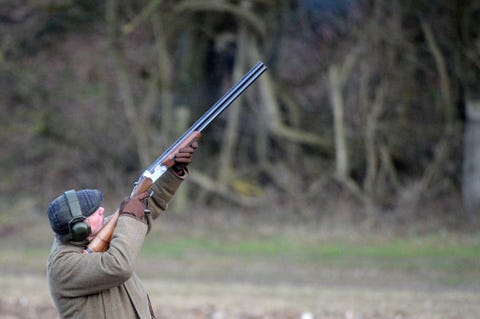
Hunter with double-barreled, break-open shotgun.GETTY IMAGES
Shotguns: Shotguns are large-barrel long guns that fire a large amount of small steel or lead pellets (“shot”) with each pull of the trigger rather than a single bullet. The shot flies from the barrel in a narrow cone-shaped pattern. This dispersal aids the shooter in hitting small game animals, especially those in flight, such as ducks. The size of the shot varies, with smaller birdshot less likely to kill or incapacitate a human, while larger buckshot is more useful for home defense. Shotguns can be single-shot weapons, pump action weapons in which a single pump chambers a round, and semi-automatic. Examples of shotguns include the Mossberg 500 and Remington 870.
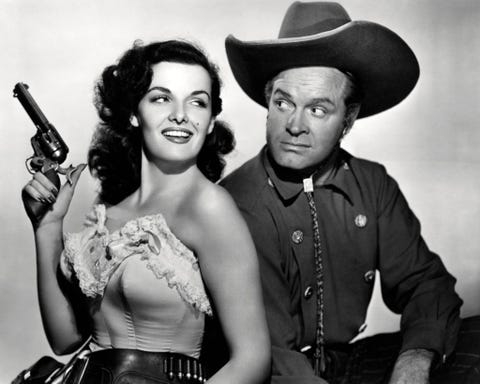
Colt Single Action Army revolver.GETTY IMAGESADVERTISEMENT – CONTINUE READING BELOW
Revolvers: Often seen in the hands of cinematic cowboys, revolvers were the first multi-shot handguns, storing up to seven bullets in a revolving cylinder that mates with the gun barrel and firing mechanism (including the firing pin). In modern revolvers, a single pull of the trigger advances the cylinder to a fresh cartridge, pulls back the hammer, and releases the hammer to strike the primer with the firing pin, firing the handgun. Modern revolvers are considered semi-automatic weapons. Examples include the Smith & Wesson Model 686 and the Ruger GP100.
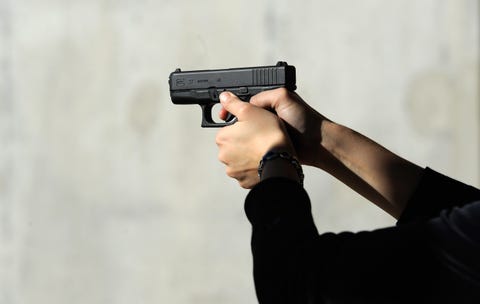
Glock 27 semiautomatic handgun.KEVORK DJANSEZIANGETTY IMAGES
Pistols: Pistols are handguns that do not use revolving cylinders. Although some single shot pistols exist, most pistols these days are semi-automatic handguns that load cartridges from a detachable magazine located in the grip. Unlike revolvers which are typically limited to up to six or seven rounds, modern pistols can carry up to 17 rounds in a magazine. Examples include the Glock 17 and the Army’s new M17 Modular Handgun System, also known as the Sig P320.
Semiautomatics vs. Automatics, and Where the Jargon Gets Confusing
Semiautomatic guns fire one bullet per pull of the trigger until the magazine is empty. Semiautomatic guns are completely legal in all 50 states. Fully automatic guns in the hands of private citizens are very rare and heavily regulated.
So-called “bump stocks”
are aftermarket products that replace the normal pistol grip and shoulder stock of AR-15 and AK-47-type rifles.
How are bump stocks not automatic weapons? The distinction lies in the fact the mechanism still fires one shot for every pull of the trigger. Bump stock-equipped guns are not semi-automatic weapons in the traditional way, but the mechanism was still approved by the ATF as semi-automatic weapon.

African American “doughboys” of World War I with M1903 Springfield rifles, similar to today’s hunting rifles.GETTY IMAGESADVERTISEMENT – CONTINUE READING BELOW
“Military-style” firearms is another frustratingly imprecise term. Guns are just much deadlier than they used to be.
Safety Tech and Tips
All modern firearms have internal mechanisms to prevent accidental firing. The most common is the safety. Each one is simple, and taken together, the four rules are pretty good at averting tragedy.
Rule #1: Always treat every firearm as though it is loaded.
Sometime people forget a gun is loaded. Sometimes the weapon was loaded without their knowledge. If someone hands you a firearm, it is always a good idea to assume it is loaded. (They might have missed something.)
Rule #2: Always keep the muzzle pointed in a safe direction.
In the event the gun does go off unintentionally, this ensures the bullet won’t accidentally hit people, pets, or even valuable property.
Rule #3: Keep your finger off the trigger until ready to shoot.
This sounds blindingly obvious. The fact is, a shocking number of people new to firearms immediately find their trigger fingers gravitating to the trigger. To people new to guns, it just seems like the place where the index finger is supposed to go. Nope. It’s an easy bad habit to get into, but don’t put your finger here until you’re ready to fire.
Rule #4: Know your surroundings
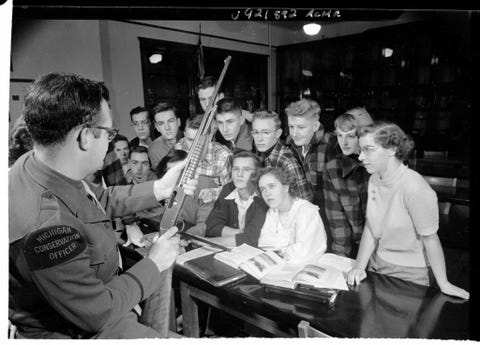
Aiming a gun with eyes focused on the target, a shooter develops tunnel vision. This makes potential safety hazards between you and your target hard to spot until the very last moment. Furthermore, bullets can travel for miles beyond your target before gravity brings them down. Only shoot in areas where you know with certainty that the entire potential path of the bullet is safe. I like to go to the shooting range, for example, and these places prohibit people from moving past the firing line until safety officers give the “all clear.” Typically, they also have a built-in sand berm or other backstop to stop bullets.ADVERTISEMENT – CONTINUE READING BELOW

GETTY IMAGES
You may be able to find more information about this and similar content at piano.ioSPONSORED CONTENT FROM AROUND THE WEB


